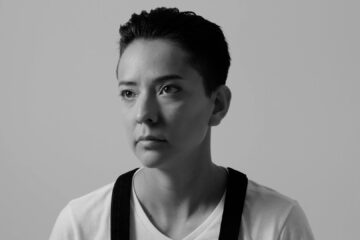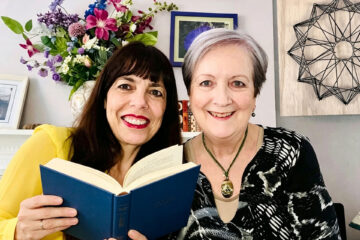

“How do we understand Irish identity when we look at it through the people shaping Ireland today?”
I began Mood Indigo as a continuation of questions that have followed me through much of my practice: who gets to be seen, who becomes part of the archive, and how do our ideas of identity and belonging change over time?
I am an African American artist who has lived and worked in Ireland for over a decade. During that time, Ireland has become home, but it has also become a place I continually observe through the perspective of someone who arrived from somewhere else. Mood Indigo comes from that position. It is both a portrait of contemporary Ireland and a personal attempt to understand the country I now call home.
The project grew directly from Dead Zoo in Blue, a body of work I developed through research and access to Ireland’s Natural History Museum. That project asked questions about museums, colonial histories, classification and the ways institutions determine what is preserved and how it is remembered. While making that work, I became increasingly interested in turning the camera away from collections and towards living people.
That shift became Mood Indigo.
The project consists of 120 portraits of people of colour living across Ireland, photographed on a specialised blue tinted film stock. The number is intentional, reflecting 120 years since 1906 and creating a framework through which I can think about Ireland’s journey towards independence, the formation of the modern state and the country that exists today. The portraits include people from different generations, backgrounds and walks of life. Some were born here, others arrived here. Together, they represent an Ireland that is continually changing.
Central to the work is the Irish term duine gorm, literally “blue person”, historically used to describe a Black person. I was fascinated by this relationship between Blackness and blueness within language. It became the starting point for an entire visual vocabulary.
I photograph every sitter using the same blue film. The process is analogue and intentionally slow. Film does not allow me the endless corrections and immediate reassurance of a digital screen. I have to trust the person in front of me, the light, the film and my own instincts. That uncertainty is important. Each portrait becomes an encounter rather than simply a record.
As the project has developed, the blue has taken on meanings far beyond duine gorm. It carries melancholy, history, spirituality, distance and possibility. It connects to the blues and to African American musical traditions, particularly Duke Ellington’s Mood Indigo and the work of Nina Simone, where beauty, sorrow, resistance, humour and survival can occupy the same space.
There are other histories within the colour too. Across different cultures, blue has been connected to spirituality, power and the unknowable. In Hindu traditions, Krishna is frequently represented with blue skin, suggesting something too vast or infinite to be contained by an ordinary human colour. These references are not intended to collapse different traditions into one another. Instead, I am interested in how a single colour can travel between cultures and accumulate completely different meanings.

Portraiture has its own history of deciding who deserves to be represented. I think about painters such as Velázquez and Modigliani, but also about African masks and traditions in which the face can operate as something more complicated than an individual likeness. A portrait can contain status, memory, ancestry, performance and imagination.
Modigliani’s eyes have been particularly important to me. His figures sometimes look back at us through eyes that reveal almost nothing. There is an interior world that the viewer cannot access. I like that refusal. Photography has historically carried an assumption that looking at someone allows us to understand them. I am interested in resisting that idea. The people I photograph do not owe the viewer their entire story.
That has become increasingly important as Mood Indigo has grown. The youngest people I have photographed are children; the oldest are in their eighties. Artists sit alongside activists, academics, musicians, workers, parents and people whose lives may never appear in a museum collection or history book. What connects them is not a single definition of Blackness or Irishness, but their presence within Ireland now.
I am not interested in presenting Black people as something newly added to Irish culture. Migration is often discussed through the language of arrival, as though people remain permanently outside the place they have moved to. After enough years, generations, friendships, families, contributions and memories, that distinction becomes increasingly difficult to maintain.

This is where Mood Indigo connects most strongly to questions of Irish independence.
Independence is usually remembered through major political events, institutions and historical figures. But a nation is also built through ordinary lives. Ireland in 2026 is not Ireland in 1916, nor should it be. The country continues to define itself through the people living within it.
The portraits therefore do not attempt to provide a definitive statement about what it means to be Black and Irish. I would rather they complicate the question.
Every person I photograph brings another history into the frame. Every portrait slightly changes the meaning of the portraits around it. Individually they are encounters with particular people; collectively they begin to resemble an archive.
For me, that is ultimately what Mood Indigo is becoming: a living archive of an Ireland in transition.
I am still making the work, and that is important. I do not see the project as something that needs to arrive at a neat conclusion. The people I have met through it have already changed my understanding of Ireland and of my own relationship to this country. With every portrait, the archive becomes larger, stranger and more complicated.
Perhaps that is the point.
Blue is not simply the colour that holds these portraits together. It becomes a way of looking: at history, at Ireland, at Blackness and at the possibility of belonging to more than one story at the same time.
Jana Bulochova: Echo from the Past
Find out more artist HERE